Technology Matching Fund (TMF) Grants
Technology Matching Fund (TMF)
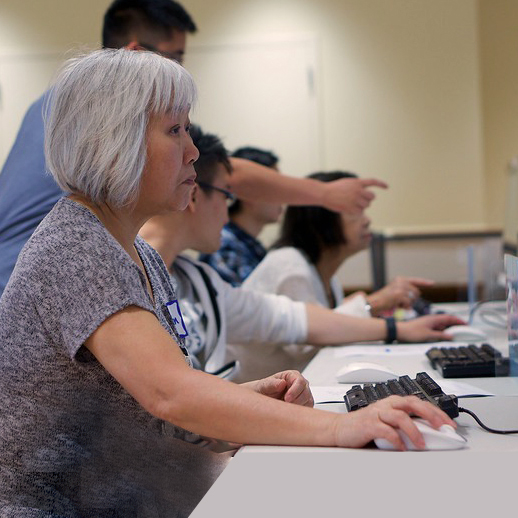
Technology Matching Fund (TMF) grants are a cornerstone of the City’s Digital Equity Program. Our vision is for Seattle to be a city where technology’s opportunities equitably empower all residents and communities, especially those who are historically underserved or underrepresented. These grants seek to support community-driven solutions to achieving digital equity in Seattle. The Technology Matching Fund was established in 1997 to support community efforts to close the digital divide and foster a technology-healthy city. The fund continues the legacy of Bill Wright, a Central District community leader who developed Midtown Commons, one of Seattle’s early technology access and education centers.
What We Fund
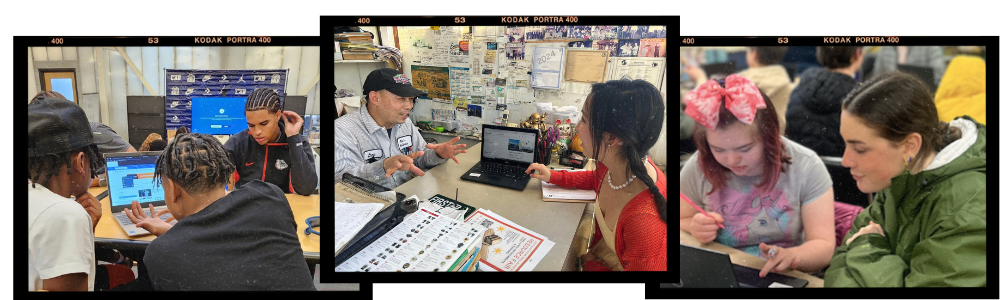
Digital equity grants aim to increase internet access and adoption through:
- Digital navigator services: Provide one-on-one or small group, just-in-time assistance.
- Digital literacy classes/workshops: Provide digital literacy skills training to new technology users.
- Devices and technical support: Provide devices (for example: laptops, Chromebooks, tablets, desktop computers, smartphones, assistive technology) and the technical training or support needed to use them effectively.
- Internet connectivity: Provide internet to low-income Seattle residents by expanding WiFi, Citizens Broadband Radio Service (CBRS) access, or another means (for example: hotspots, routers, SIM cards, or WiFi access points).
How to apply for a 2026 TMF Grant
Eligible proposals must:
- Have all project activities occur within the Seattle City limits.
- Provide services that are accessible and take place at locations that benefit City of Seattle residents.
- Support activities that focus on contributing to creating access and digital equity for the most-impacted communities.
- Have 25% confirmed community match.
- Be completed within one year of contracting.
Eligible Applicants
Applicants must be located within the Seattle city limits and have a City of Seattle address on their application.
- Organizations that have 501(c)(3) nonprofit status.
- Neighborhood or Community groups that have a *fiscal sponsor with 501(c)(3) nonprofit status.
- Tribes and tribal organizations.
- Parent-Teacher-Student Associations (PTSA).**
- Non-profit business associations.
- Community-based organizations.
*A FISCAL SPONSOR is a 501(c)(3) nonprofit organization that agrees to act as the trustee of your project’s funds and assumes financial responsibilities related to recordkeeping and the disbursement of funds. If you are not a 501(c)(3) nonprofit organization, you are required to secure a fiscal sponsor in order to contract with the City of Seattle. For groups that must hire a fiscal sponsor, a fee of 5% to 10% of the total grant award is often charged. This fee may be included in your proposal budget.
Note: Only one application per applicant organization is allowed, but fiscal sponsors may serve as fiscal sponsor for multiple groups/projects.
** SCHOOL-BASED PROJECTS: Applications for school-based projects are eligible but must come from a Parent-Teacher-Student Association or community-based organization. The funds must support after-school or evening-based programs. Funds may not be used for in-school projects that do not engage the larger community.
Timeline and Deadlines
| Award Amount: up to $45,000 | Project Length: Up to 12 months |
| Application Open | Thursday, October 15, 2026 |
| Virtual Information Session | Wednesday, October 21, 2026, 3:00 p.m. - 4:00 p.m. |
| In-person Information Session | Tuesday, October 27, 2026, 12:30 p.m. - 1:30 p.m. |
| Preliminary Application Review: | Request a review of your draft application by Tuesday, November 17, 2026 by emailing communitytechnology@seattle.gov. |
| Application Deadline | January 15, 2027 @ 5:00 p.m. |
| Award Notification | March 2027 |
| Contracting with Awarded Projects | April – May 2027 |
| Project Implementation | June 2027 – May 2028 |
Here are some helpful resources for writing your grant applications (click to download):
- Grant Guidelines
- Scoring Criteria
- Project Narrative Template (for reference only)
- Project Timeline Template (complete and upload to Fluxx application)
Applications are accepted through the City’s FLUXX portal. Use the Chrome browser for an optimized experience.
If you do not have an account:
- Click on “Create an Account Now” and complete the account information. (Note: You will add information about your organization on the application.)
- Please verify your account by clicking on the verification link in your email. You will need to create a password.
- Once the password is set, you will be navigated to the Grantee Portal.
If you have a FLUXX account:
- Sign into your account in the City's FLUXX portal.
- Find the TMF “Start application button” on Department of Neighborhood’s page in FLUXX.
- You must complete all sections of the application and submit your application online by the deadline.
TMF Info Session #1 (virtual): Wednesday, October 21, 2026, 3:00 p.m. - 4:00 p.m.
1. Join from the meeting link
2. Join by meeting number
Meeting number (access code): 2662 608 7705
Meeting password: PgyxxXTR328 (74999987 when dialing from a phone or video system)
3. Tap to join from a mobile device (attendees only)
+1 (650) 479-3208,,26626087705#74999987# United States Toll
Some mobile devices may ask attendees to enter a numeric password.
4. Join by phone
+1 (650) 479-3208 United States Toll
TMF Info Session #2 (in-person): Tuesday, October 27, 2026, 12:30 a.m. - 1:30 p.m.
- In-person session at Douglass Truth Library
- 2300 E Yesler Way, Seattle, WA 98122
If you would like to schedule a meeting, have questions about the application, or need technical assistance, please email communitytechnology@seattle.gov.
Additional TMF Resources
History of the Technology Matching Fund Project
The Technology Matching Fund program was established by Resolution 29673 and 31919 in 1997 to support the community’s efforts to close the digital divide and encourage a technology-healthy city. Over $7 million has been awarded since 1998. The fund continues the legacy of Bill Wright, a Central District community leader who embodied the program goals of creating digital equity and opportunities for all, using technology tools to engage residents, improve communications, and strengthen communities. Bill Wright developed Midtown Commons, one of the early technology access and education centers in Seattle.
The City of Seattle conducted a broad survey (quantitative research) and focus groups (qualitative research) to better understand residents' access and use of technology and internet services, barriers to use, and the support needed to help ensure all residents have the same opportunities. Our Technology Access and Adoption Study helps guide digital equity programs and funding for Seattle residents.
The lack of access to internet-accessible devices and technical skills plays a significant role in why some residents remain unconnected. Partnering with organizations that support communities in a holistic way is essential for reaching diverse populations that need digital support. Read the City of Seattle's Internet For All Strategies and Action Plan here.